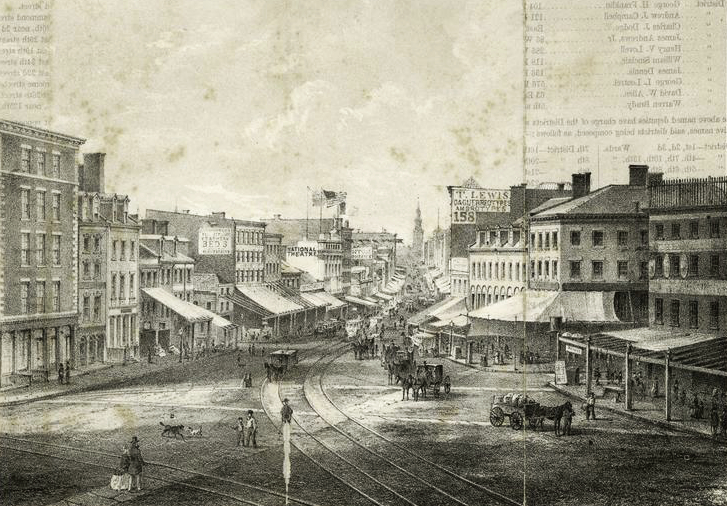
During the height of Jonas' circus ventures, the Bartlett family lived at 87 Centre Street and 192 Chatham Street. Directories describe them as boarding houses. It was on Chatham Street that his son Jonas Jarvis died of scarlet fever.(1)
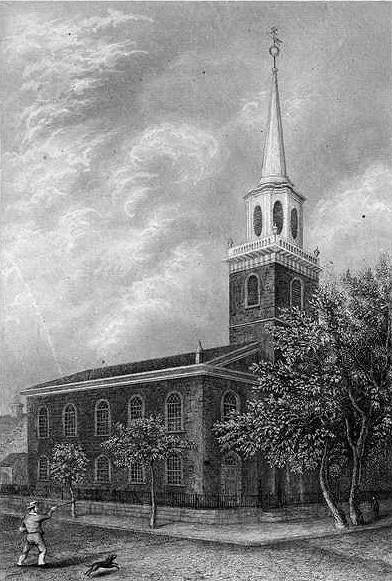
He was buried in St. Stephen's churchyard, and was later removed with his mouldering neighbors to a large, unmarked plot at Cypress Hills Cemetery. He was known as J. Jarvis, and may have been named for Jay Jarvis, a fellow Zoological Institute subscriber and member of St. Stephen's. Jonas' son seems also to have been called Jay, leaving the possibility that it was a nickname honoring the family friend and a way to distinguish him from the elder Jonas. Although the Bartletts had been Baptists in Providence, St. Stephen's was Episcopal.
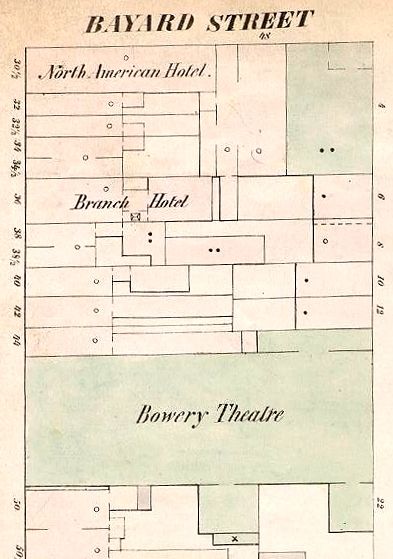
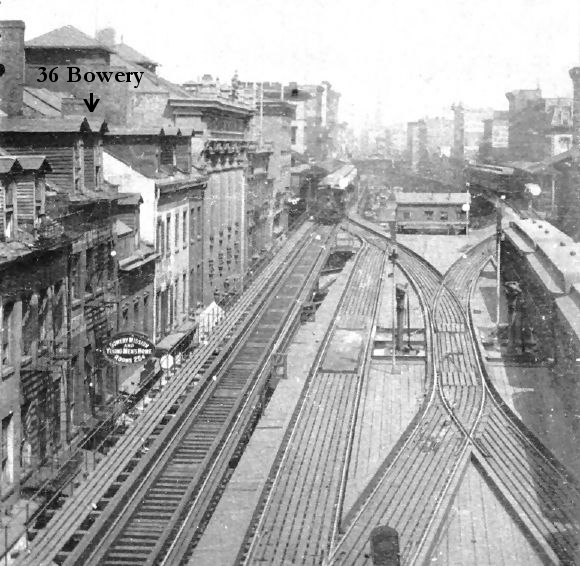
Jonas, Harriet and the children moved back to the Bowery by September of 1840, when he and William Delavan took over the Branch Hotel. When they opened, they put this ad in The New York Herald: "BRANCH HOTEL - No. 36 BOWERY, FORMERLY kept by Captain Samuel Seely, having passed in to the hands of Messrs. J. BARTLETT and W. A. DELAVAN, is now opened on a scale not to be surpassed by any other establishment in this city. Their accommodations are of the first rate order, having been fitted up entirely new, and ready for the reception of gentlemen, who wish to partake of good lodgings, &c. Every attention will be paid for the comfort of all who may wish to patronize them. Their bar is stored with the choicest of liquors of brands of all kinds, with all the delicacies that persons may require to refresh themselves with."(1) About a year later Jonas was probably the sole proprietor of The Branch, and had added a restaurant. The New York Herald has this to say about it:
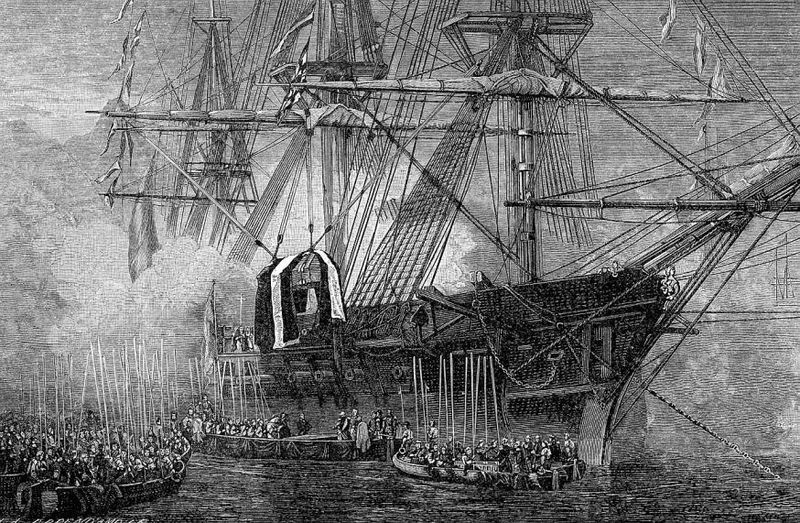
BARTLETT'S BRANCH HOTEL AND REFECTORY, 36 Bowery - The Bowery may now boast of an establishment in point of elegance, comfort and taste, superior to any yet presented to the public in that section of the city. Mr. Jonas Bartlett, at [#]36, has added to his already well established and popular place of resort, a refectory, which has been satisfactorily tested within the last few days since its opening, by numbers, upon whom this long wished for and elegantly arranged accession to the citizen's comfort, burst with grand and unexpected brilliancy. In point of interior elegance it has no competitor. While the choice selection of all that contributes to the appetites, is served in a style of unequalled taste. A visit to the Saloon, where, independent of the usual atractions, the only perfect copy of the magnificent French plates, of the removal on board the Belle Poule of the remains of Napolean from St. Helena to Paris [see below], and the procession to the Church of Invalids, may be seen, well deserving the study of the artist, the historian and the politician, is in itself a rational source of enjoyment; the officer, crew and ships being now in this port, attach to these exquisite paintings, regularly arranged, a peculiar fascination. Mr. Bartlett's spirited enterprise justly entitles him to a continuation of that patronage that he has successfully enjoyed, and no doubt his porsperity will be commensurate with his merits.(1)
The New York Standard published a piece about Jonas at this time. Some of it's silly for entertaining reading, but based on the writer's impression of Jonas' accomplishments since their boyhood together in Wilmington.(1)
The Branch Hotel, to my surprise, I found was kept by my old friend, Jonas Bartlett, whose log cabin was at one time very near mine...The Branch Hotel is decidedly one of the most elegant and fascinating affairs that I know of. All the tables are of white marble; the apartments are decorated with "pictorials" of the lastest kind, selected by the hand of taste, and kept in order by the hands of a master; and then, every thing is so neat and perfectly in order - such a rigid system of discipline is kept up among the servants, that the "Branch Hotel, 36 Bowery," may justly be called one of the most magnificent and desirable establishments of the day. Jonas Bartlett has long been known to me - and I know him well. I recollect the time that he swam a race on the back of a porpoise, "between Gay Head and Tom Never's-nose," with Long Tom Coffin, of Nantucket, and he beat Tom awfully. I knew him in Vermont, as a farmer; in Connecticut, as a mail contractor; in Rhode Island, as a newspaper editor; in Washington City, as the keeper of a giraffe and the manager of a circus; in New York, as a hotel-keeper and a silent partner in a theatrical establishment; in Arkansas, as a lawyer of eminence; in South Carolina, as a teacher of the learned languages; in London, as a professor of neurology and animal magnetism; in Paris, as a diplomatic agent, accredited by the "Government of the Hague," and in Paraguay, as the "Principal Secretary of State for Foreign Affairs" to the renowned and imperial dictator and despot of that country, Dr. Francin." In all the relations of life Jonas has acquitted himself with a noble ability; - enriched himself, benefitted the human family, advanced the great causes of science and literature, and is now th keeper of the "Branch Hotel, No. 36 Bowery," where he supplies the wants of man, eschews all kinds of politics, worships his wife and some half-dozen little Jonases, lives like a nabob, displayes all the elegance of a well-bred gentleman, and drinks cold water. Go and see him, Mr. Standard, and shake hands with one of the best fellows and most accomplished gentlemen of this our day and generation."
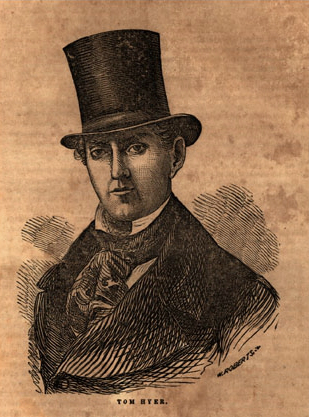
In the early 1850s, The New York Times had notices of Sixth Ward Whig meetings at the hotel.(1) When the Branch closed in 1855, an article mentions among a cluster of "rum holes...The Branch Hotel, that well known rendezvous of the b'hoys, fancy and fast men..."(1) B'hoys refers to the Bowery Boys gang mentioned earlier. A b'hoy is said to have been "known by his swagger, his soaplocks, his fireman's red flannel shirt. [On] stage...he was Mose; he bobbed up everywhere like the Yankee, in California, in China, though he belonged unmistakably to New York. Impudent, full of racy and belligerent opinion, he appeared in the public view at a moment when national feeling had gone rampant with the outbreak of the Mexican War, with the acquisition of the far western empire of California, and the sudden discovery there of gold. In Mose was centered all the arrogance of an acute national self-esteem. He bragged, he was always on top, he waved a national flag whose texture was particularly coarse, and gained his constituency by this means and by a gutter wit...the theater had patronized the "b'hoys," the "b'hoys" patronized the theater, taking up posts in the galleries. Their hisses and outspoken comments were the terror of actors; their applause was a coveted guarantee of success."(1) Martin Scorcese characterized the b'hoy with "Bill the Butcher" in the film "Gangs of New York." He was based, in part, on William Poole. Poole and Tom Hyer severely beat a bartender for denying them liquor. They epitomized the b'hoy, although both were particularly prone to physical fighting. Jonas had somehow befriended Hyer, who is described as the first professional boxing champion and was an international sensation. His brawls led to the first boxing event to garner frenzied media attention and hype, at which he defeated Englishman (but ethnically Irish) "Yankee" Sullivan on 7 February 1849 and was declared, unofficially, world champion.(1) "The match with Hyer, for an unheard-of $10,000 winner's purse, was arranged in part by boxing fans with Nativist sentiments who wanted to replace Sullivan with an American-born champion."(1) These types of events were illegal at the time. Hyer may have been backed financially by Jonas, and he succeeded him for several years as proprietor at the Branch shortly after the fight:
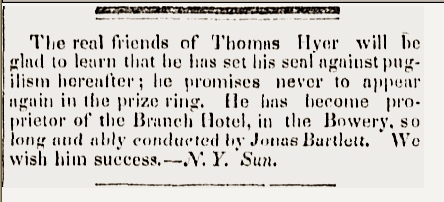
Another glimpse into life at the Branch Hotel is offered by Moses Cleveland in his autobiography. He came to New York in the Winter of 1843-1844 looking for work and was hired as a bartender at the hotel. He soon quit, calling it a front for a gambling operation, and moved on to a temperence hall (no drinking!) where things were "more in keeping with my own conscience."(1)
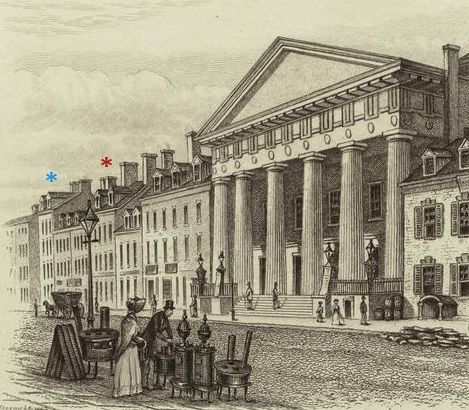
The Bowery Theatre burned so many times it's remarkable that any of the older buildings nearby still stood in the 1880s. The last fire while Jonas was nearby was in 1845, and it was the building that hosted his circus and equestrian troupe in 1840 and 1841. The connection of the Branch with local entertainers is still apparent in an article about the fire: "Amid the turmoil of the scene, no one was more active than Hervio Nano, on the roof of Messrs. Bartlett's Hotel, in the Bowery, calling out for those below to send him up a hose, and crying aloud that he would save the buildings. But he was unheeded...no one could have exercised himself more energetically."(boweryfirenano) The situation was panic and chaos. People in adjoining buildings threw their belongings out the windows without opening them, destroying everything in the process. Further away, household goods and furniture were dragged to the sidewalks and into the streets, only to be smashed by fire engines rushing to the theater or stolen by looters. Some people rushed up to the theater and stood under the giant, pedimented portico, apparently to look into the building. When they portico collapsed, they were trapped between the theater and the portico debris and had to be rescued. The police reportedly managed to keep down the mob mentality, but the firemen were proclaimed as the heroes of the day, containing the fire mainly to the theater despite the ignition and parial damage of other buildings before everything was under control. This was the fourth fire (and not the last) to bring down a theater on that site, the second time under Thomas Hamblin's management, but the building had gone into recievership and apparently was not insured.(NYTribune26 Apr 1845, NYHerald same date)
What the Bartletts saw and were involved with on the Bowery was well beyond what they would have experienced on Providence's Benefit St. Given that the Bartletts stayed on or near the Bowery for about 14 years, Jonas must have found financial success there, and the environment was undoubtedly thrilling at times, but what about Harriet? As a woman in her 20s raised in a relatively quiet New England city, it must have been a shock to her, but was it also a thrill? It will never be known how she felt about this kind of life. In fact, nothing at all about her has been passed down in the family other than the barest of facts. She had six children to look after during this period, but beyond that can only be speculation.

| previous page |